Thursday, 25 February 2016

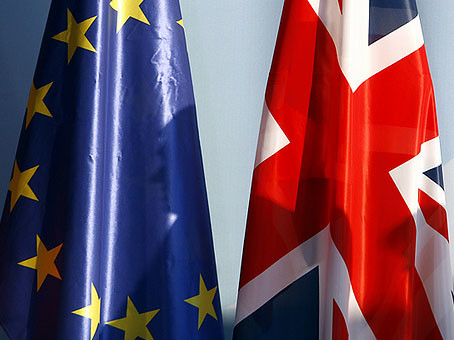
How Would Leaving the European Union Affect Sovereignty and Therefore the UK's Constitution?

How would leaving the European Union affect sovereignty and therefore 
the UK's Constitution?

It was recently announced by Prime Minister David Cameron that a referendum regarding the UK's place within the European Union is to be held on the 23rd of June, the decision to leave or stay could have serious long and short term repercussions for the United Kingdom. All British citizens over the age of 18 will be able to take part in the nation-wide referendum, its still being debated whether there will be a large turnout or not. I personally see staying within the EU as a beneficial thing, it makes the UK more influential world wide , as well as aids the economy. Never the less many of those promoting Britain's exit from the EU seem to claim that the UK will become sovereign once again, is this really the case? If so will this affect our constitution? 

According to the constitution Britain's sovereignty lies within the Houses of Parliament, its this political institution that holds the power to create laws, put in place laws or remove them completely. However since the UK became part of the EU it has in fact lost some of its sovereignty, for example all EU laws now completely over shadow laws put in place by our parliament, additionally the European Convention of Human Rights can intervene in certain issues and may stop the passing of a 'British Bill of Rights'. Admittedly a lot of our sovereignty has been taken from Westminster and is now transferred to Brussels. If we were to leave the European Union we would no longed be obliged to align ourselves with EU laws and conventions, it would give the country greater power when it came to dealing with holding suspected terrorists or deporting immigrants, at the cost of security and economic factors.

The un-codified constitution of the UK will also be affected if we leave the European Union, to begin with the UK could now introduce a wide variety of new Bills as they're no longer under EU regulations. Furthermore various statutes and conventions concerning trade and so fourth with the EU can now be over looked as its no longer binding, this could have a negative or a positive affect on the economy.

Overall if the UK did decide to opt out of the European Union it would receive the majority of its sovereignty back, however as Defence Secretary Michael Fallon stated 'The Golden Age' of sovereignty is over and the EU is still going to be able to influence the UK even if it leaves the EU. Never the less Westminster would see a boost in its power, at the cost of throwing Britain into the unknown. 

Friday, 19 February 2016

Where does sovereignty lie in the UK?

Where does Sovereignty lie in the UK?

The UK is a parliamentary democracy, with an un-codified constitution that is also unwritten, never the less contained with in this constitution is the article which states where the UK's sovereignty lies. Sovereignty is the legitimate and exclusive right to exercise power in a specific area, basically stating that sovereignty is a form of ultimate/ supreme power. In the UK the Parliament, more specifically the House of Commons, have the power to pass or reject laws and legislation, however is this really where the Sovereignty lies?


Firstly, in the UK's constitution it states that Parliament holds supreme authority in the UK, therefore it is the only real body in the UK which is able to pass, reject or remove laws. Additionally almost all key decisions have to go through parliament in order to become legitimised, however issues regarding military and foreign affairs can be passed and decided by the Prime Minister, additionally parliament is not bound by its predecessors, for example this states that any previous parliaments cannot influence the current one. Although some might argue that local councils have control of their constituencies it is actually parliament that allows them to do this, as power is dedicated to them by parliament, yet this power can be repealed if necessary. Therefore these points make it clear that parliament holds true power in the UK, and as a democracy it shares this to various places.

On the other hand parliamentary sovereignty can be argued due to a variety of reasons, to begin with the UK is part of the European Union meaning that in many cases UK law is inferior to that of the laws set in place by the EU, the Treaty of Rome in 1973 made this point apparent. Therefore it is debated that power has been stolen by the European Union and is limiting the UK's sovereignty, never the less parliament can vote and withdraw from the EU at any time. Furthermore since the introduction of the fixed term act an election is held every 5 years, some argue that at this point sovereignty really lies with the people as its their votes that holds true power, upon the end of the election power is transferred back to parliament.

Overall despite various arguments against where sovereignty lies, its clear to say that parliament holds the sovereignty. The fact that its written in to the constitution, via a statute, only reinforces this point, some say that with devolution the parliament lost some of its sovereignty however this was merely parliament spreading out its supreme power, and it could very easily take all of that power back if it wished. A parliament being sovereign is somewhat common place in the political world with countries such as India and Canada following suit.

Sunday, 7 February 2016

What are the core principles of the UK Constitution?

What are the Core Principles of the UK Constitution?

The UK constitution, as mentioned in previous blogs, stands out for an array of reasons, unlike many of the constitutions of the world, the British constitution is un-written and un-codified. This means unlike the constitution of the United States the British constitution is not contained within a single document and is not directly written down. This unique type of constitution may cause its core principles to differ to that of other nations, and this begs the question, what really are the core principles of the UK's constitution.

To begin with lets look at the first core principal, this being Parliamentary Sovereignty. The idea of having sovereignty is essential for all constitutions, in the UK sovereignty lies with Parliament or more specifically the 'Crown in Parliament'. Sovereignty means that Parliament has the power to create, adjust or remove any law it demands, some may argue this is undemocratic as power is concentrated within the single body of Parliament. Furthermore many have argued that Parliament in the UK is not completely sovereign as many other political factors can greatly limit its sovereignty, these can include over powerful pressure groups, large trading partners such as various EU member states or the United States. The policies and actions of major worldwide organizations can restrict the parliamentary sovereignty, one prime example of which would be the UN which can put forward laws everyone must apply to.

A second core principal of the UK's constitution is the Constitutional Monarchy, despite the modern day monarchy lacking any real power it still holds a significant place in the British political world and is a key part of the constitution. During the 1800's the majority of the reigning monarchs power was transferred to parliament, more specifically the ministers that make up Parliament but mainly to the Prime Minister. A man by the name of Walter Bagehot made the distinction between 'dignified' and 'efficient' parts of the constitution. He considered the monarchy and the House of Lords to be a dignified section and then on the other hand the cabinet and House of Commons to efficient, but he made it clear that a 'dignified' institution still played a vital role even if they lacked major political power. Therefore in the modern day the monarchy is to play the role of being a political symbol in order to promote allegiance during times of political turmoil. Now days the monarch does have the power to take back his or her power but they often refrain from doing so, as the backlash would be too severe, the monarch according to Bagehot the modern monarch should only be informed, be consulted as well as warn and encourage the government.

Thirdly the Rule of Law is a key principle of the UK constitution. Many have stated that the rule of law is an alternate form of codified constitution, despite there not being any higher law the government must still under go legal checks and political/power restraints. This therefore stops the ruling party from becoming above the law, they cannot enact or plan to enact legislation that would make them unaccountable for there problems or allow themselves to break the constitution.

Overall these key principles are needed for an effective constitution, despite people thinking that a codified constitution is the most effective type of constitution, countries without one have put in place principles in order to be as democratic as possible. Furthermore there are additional core principles that make up the constitution such as EU membership and a Parliamentary government, these all enable the UK's constitution to be an effective safe guard against unconstitutional laws or an over-mighty ruler. 

Saturday, 30 January 2016

In My Opinion, Should the UK Adopt a Codified Constitution?

Should the United Kingdom of Great Britain and Northern Ireland adopt a Codified Constitution?

The UK stands out in the political world for a wide array of reasons, it may be due to its vibrant historical past or the continued survival of the monarchy (be it with reduced powers), or perhaps for its unique constitution. The UK has an un-codified constitution, whereas the United States has a codified one, this means that deep down on a constitutional level there are a great number of differences between the two. With a codified constitution being the most common form of constitution in the modern world, however does this specifically mean that its a more effective form of constitution ? If so, should the UK put measures in place in order to adopt a codified constitution? 

To begin with lets look at the perks of having our constitution remain unchanged, the constitution of the UK is un-codified, this means that the constitution is not with held in a single document, in our case the constitution is dispersed in a variety of ways, including statues and agreements. Additionally the UK's constitution is not written down, this differs from the constitution of the United States, their prized constitution is written and contained with in a single document, this was signed upon the formation of the US after the war of independence and the actual document itself is housed in the National Archives. One major pro to having a codified constitution is that is not entrenched, instead the UK's constitution changes and evolves with the times in order to suit modern issues in the most effective way possible. Furthermore the lack of entrenchment cuts short the time taken to adjust a constitution, leading on from this the British constitution is said to be flexible. The term flexible means that the constitution can be amended via  an ordinary process of legislation, this makes it incredibly easy to make changes to the constitution.

Now let's examine the positives of changing our constitution to a codified document. Firstly, a codified constitution comes with something called 'entrenchment' , this feature can be pictured as a sort of non-literal trench , it has the key goal of stopping a government from making short term amendments. For example entrenchment could stop a government from suddenly removing people's Human Rights in order to then discriminate against then or a minority, or stop the government from giving themselves excessive powers. A codified constitution also allows all key constitutional provisions to be collected together within a single document , this makes it easier to examine current clauses or articles of a constitution. Finally, a codified constitution would make itself judicial, this means that important constitutional changes are scrutinised heavily by judges , this way it's ensured that changes are only made with the intent to protect the people and the nation. Although this can occur in an un-codified constitution it's much harder to do and so forth.

With all the evidence examined , I personally think that the UK should not change its constitution to a codified one. One main reason for this is the idea that the British constitution evolves and changes with the times , there it ensures that the constitution is at its most modern and effective 24/7, furthermore this would mean that when it comes to issues regarding racism and homophobia the British constitution would have already adapted in such a way as to immediately over come the modern challenges (would allow gay marriage and would charge those who promote racism). Secondly its key to keep our constitution un-codified as it allows it to be flexible , this is an important feature as it speeds up the time taken to adapt and implement new laws , to reflect social change through the ages. Overall it's important that our un-codified constitution remains unchanged , it has proven time and time again to be the most efficient way of governing our society , it's flexibility and stability has assured that it's a key asset in the British political world.

Saturday, 23 January 2016

What is a Constitution and why is it important?

The Importance of a Constitution

Constitutions are famed in the political world for being the key to safeguarding the rights and freedoms of the general populous. The most famous constitution is that of Americas, which includes some memorable amendments including: the right to keep and bear arms and the right to plead the fifth amendment (Right to say nothing when questioned). Every nation on the planet has a constitution of some kind, however each one is different in its own right, some are written, some are not and in certain cases the constitution is split amongst different documents. Many nations look to their constitutions in order to point out the limitations the government has, after all a constitution is set out to reveal how limited the governments power is over the people.

To begin with lets look at what a constitution actually is. In the simplest terms possible, a constitution is a set of rules that govern a country. These rules aim to: protect the peoples civil liberties, protect the people from the government and in turn these protect against an autocracy or dictator. A constitution also organises the distribution of power within a political system, for example in the UK this was achieved via 'devolution', this was where power had once been centralised in Westminster, however after much debate power was dispersed with Scotland getting its own Parliament, whilst Northern Ireland and Wales gained their own assemblies. The reason as to why various states adopt constitutions is simple 'We cannot trust the government, or anyone that has power over us'. If a nation lacked a constitution there would not be a barrier , meaning the government could do as it wished without limitation. For example people could be scrapped of their freedoms and rights.

The constitution is different to that of other countries for a variety of reasons. To begin with the basis of the UK's constitution comes from the Magna Carta which was created in 1215, this was created because the people , tired of paying excessive taxes, demanded that the King must abide by the laws of the land and people were given rights against the wishes of the King, therefore reducing the powers of the Monarchs. The Magna Carta is still of use today as certain clauses still remain in use. The UK's constitution is different in the sense that it is unwritten and not codified, this means the constitution is divided between various documents, treaties and  statutes. Its also not written down unlike the American constitution that was written down and signed in 1787, this constitution was written down in a single document and outlines the rights of the people in this way. The majority of nations have a codified constitution, these include the USA, Mongolia, France etc. Yet only 5 nations lack a codified constitution these are: the UK, Israel, New Zealand, Saudi Arabia and Canada.  

Overall why is it important to have a constitution? Well constitutions are essential for any democracy for a wide array of reasons, as previously mentioned they can prevent the rise of autocratic leaders (dictators) by limiting the governments power and ensuring that the rights of the people are protected. As often seen through history, excessive power often leads to corruption, therefore its essential for a constitution to be put in place as it prevents serious corruption and mis-use of power, for example a government cannot just come into power and immediately abuse a minority without breaking the constitution. So it can be said, that in general a constitution is important for the people as it shields them from the powers of government.

Saturday, 12 December 2015

What are the least democratic Pressure Groups and why?

What are the Least Democratic Pressure Groups and Why?

Pressure groups are often praised for their role in ensuring a nation is democratic, they allow general citizens to participate in politics in order to influence government legislation and actions. However there is a negative side to pressure groups, not all are completely democratic, and some lack it all together. This can occur in a number of different ways, its these ways which I shall examine.

To begin with there is one major democratic flaw with a lot of Pressure groups, this being that their leaders are not democratically elected via a vote. So for example in a lot of cases the founder of a particular group remains its leader until he or she feels it is time to stand down, very rarely do elections occur. Additionally in a liberal and democratic society any leader or group should speak truthfully when referring to statistics as well as making sure they are accountable for them and their groups actions. This can also include the actions of their supporters when on strikes or protest, etc.

A second undemocratic aspect of Pressure Groups is the fact that their size doesn't mean they are more likely to be heard, for example it all comes down to their status. If a pressure group is insider or outsider can directly correlate to how much influence they can wield over the government. Insider groups, such as the BMA are often seen as very influential as their closeness to the government can mean that they can meet regularly and negotiate actions and legislation. Therefore a large outsider group (which represents a greater percentage of views) may have little impact on the government compared to a small insider group, this is not only unfair but also undemocratic. The CBI is a some what small pressure group however it works extremely closely with the Conservative government, this gives them greater influence over the conservative party, however the conservatives can be said to retain influence over them, its likely that if Labour were in power the CBI would loose its influence and be replaced by the Trade Unions.

The CBI also are undemocratic as they do not elect their chairman, he or she is put in place by a committee, additionally you must be a wealthy business owner to be consider for the position, making it extremely unlikely that you or me could be candidates for such a role. Even then the President of the CBI can be advised by the committee, meaning that they hold little to no power.
Overall almost all Pressure Groups are guilty of being undemocratic, the fact that they decide not to elect a leader through a voter is the biggest democratic downfall. Furthermore its often stated that even the smallest insider group can influence the government greater than a large outsider group, meaning that the majority of gets ignored.
Confederation of British Industry Logo.png


Sunday, 6 December 2015

Why are some Pressure Groups more successful than others?

Why are some Pressure Groups more successful than others?

Pressure groups are often sources of media attention in the UK, for many, their strikes and protests are widely covered and some even gain government responses. However are many pressure groups really that successful in influencing government policy and actions? If so why and is any specific group more successful than another?

To begin with lets look at an example of a relatively successful pressure group, the British Medical Association, this pressure group supports and fights for the rights of NHS doctors as well as junior doctors. It has tens of thousands of members with in the UK and holds great influence over the government to this day, and in recent times has succeeded in changing the governments actions. One reason as to why this sectional pressure group has seen success is due to its status as an insider pressure group, this means that the group works and hold talks with the government (Mainly with the Health secretary). The fact that the group works with the the state reveals that the government knows the power this group wields, recently the government buckled under the pressure of the BMA and gave into threats of a strike. They opened into negotiations as they feared the strike of thousands of doctors could potentially cripple the NHS. Another reason why this group may see success is the fact that the public greatly supports this pressure group, protests are often made up of regular civilians as well as doctors, making the group that much more intimidating.

Generally insider groups can have a greater impact on the government when compared to an outsider group, pressure groups which are promotional and insider can be some what assured that it will have the opportunity to influence the government whilst still gaining support. Promotional groups, which are open to all members of society, have a greater chance at influencing the government through protests , as their large numbers an sway the government. However its the need to be an insider group that is important, this gives you some what frequent meetings with government to discuss your ideas on their legislation and actions. If your pressure group is outsider and fights for an extreme ideology its likely, that not only will you lack support from the people, but you're very likely to be ignored or opposed by the government and Parliament. 

Finally the methods used to influence the government can impact the successfulness of a pressure group. Some examples of methods commonly used include : Strikes, protests, rallies, lobbying, e-petitions and boycotts. The aim for a large majority of these is to disrupt a certain aspect of society, however almost all modern pressure groups go about achieving this in a non-violent manor. When done with a large number of people media attention can be gained , this increases peoples awareness of your cause , in turn giving you additional support from the people and even some MPs. Violent protests or rallies can end up loosing you support and the government is unlikely to want to negotiate with you. So aim to be peaceful, disrupt everyday life and try to work with the government to succeed as a pressure group.