Saturday, 28 November 2015

British Influence - A Pressure Group Spotlight

British Influence

In recent years support for pressure groups has been on the rise, so much so that some have become fully fledged political parties, take the Green Party for example. Pressure groups stand for a vast array of issues, from environmental problems to immigration, however they all have one similar goal, get their voices heard by government. Pressure groups are traditionally well organised groups of people that shared the same ideology and wish to influence the policies and actions of the government, so that eventually they align with the groups views.

One pressure group I have researched is 'British Influence'. This pressure group stands for the idea that the UK should remain a member of the European Union. The group was founded in 2012 by Peter Wilding and was actually once part of another group called 'Nucleus', however in 2012 they decided to re-launch themselves as 'British Influence' in order to trump up popular support. The pressure group has the benefit of being cross-party meaning that its members are from both sides of the political spectrum, thereof the group is not opposed to Conservative or Labour view points. 

One action which the group uses is various campaigns, the most recent one being 'Our Biggest Market', these are put forward to small business leaders that wish to remain in the European Union. The campaigns are the pressure groups main way of increasing their presence and support. However they are not their only way of gaining support, they also publish a daily email ('Europe Watch') which contains news and view on Britain's relationship with the EU. The group has even gone as far as to publish a manifesto which included contributions from various MPs, Peers, former diplomats and business owners. This was titled 'Better off in a Better Europe'. The British Influence also give backed up reasons as to why Britain is best off in the European Union. For example they give a simple, yet detailed explanation of 'The Common Security and Defence Policy' put in place by the EU. This works like NATO yet would be initiated if an operation that did not require the US or NATO arose. Overall the points this group make are well researched and backed up, the simplistic way they explain certain issues only help covey a positive sense of persuasion. 

The British Influence pressure group can be best described as a 'Promotional Group'. This can be clearly seen as their membership is open to all and they seek to advance particular ideas and principles. The fact that they accept members from the left and the right ensures the group is far from sectional. Its difficult to tell whether or not the pressure group has/is being successful in its approach, the British public are still split on whether or not to remain in the EU therefore the party still requires further campaigns to bridge this divide. I guess in 2017, when the referendum is held, it will clearly show whether or not British Influence group has affected the public and the government.

Saturday, 14 November 2015

To what extent are the current ideas of the Labour Party and Conservative Party similar and different?

To what extent are the current ideas of the Labour Party and Conservative Party similar and different?

The Labour Party and the Conservative Party are said to be the two major parties in the United Kingdom, they in turn create adversarial politics in the UK and are often seen scrutinizing on another's policies. The Labour Party has always been slightly to the left of the political spectrum (Under Corbyn's leadership they're shifting further left) and wishes to edict a socialist manifesto, whereas the Conservatives have always been to the right of the political spectrum and wish to put in place policies centred around the upper and middle classes. Already its clear to see these two parties don't seem very similar, but how true is this?

To begin with lets examine what these two parties agree on. To begin with both Parties wish to increase funding for the NHS, the Labour Party, who created the Welfare State and NHS, wish to put this in place immediately via taxation. Where as the Conservatives will increase funding but this will be achieved over time (8 billion by 2020). Additionally both parties agree that migrants should wait a particular number of years before they are allowed to claim benefits, the Conservatives want this to be 4 years whilst Labour thinks it should 2 years, it seems that the two parties agree on certain policies, but have conflicting ideas on the time scale or way of getting it achieved. When discussing the environment both parties seem to have similar ideas , both parties agree that renewable energy should be increasingly funded and that the UK should produce 0% emissions by 2020/2030. Furthermore both Labour and the Conservatives wish to build 200,000 new houses across the UK and ensure that first time buyers are helped in gaining a property. 

Now on the other hand lets look at the various policies they disagree on. Firstly Defence, the Labour Party under Jeremy Corbyn wish to dismantle the Trident Nuclear Arsenal, in order to promote 'Global Nuclear Disarmament' , the Conservative Party however have the opposite idea, they see the necessity of a Nuclear Deterrent and wish to keep and upgrade Trident in order to promote security. Labours stance on environmental issues also differs to that of the Conservative Party, Labour wishes the Badger culling as well as hunting with dogs. The Conservatives do not wish to outlaw this tradition and instead attempts to focus on creating a zero emissions UK, clearly at the expense of animals. In terms of Law and Order in the UK the parties differ in authoritarian elements. For example many of the Conservative policies wish to cripple the rise of extremism, they plan to create banning orders for extremist groups as well as 'Extremism Disruption Orders' if people are caught spreading 'Poison'. The Labour Party on the other hand is very liberal in its approach and only wish to overhaul the extremist prevention programme, in a hope to reduce the spread of extremism. 

Overall the policies of the two parties mainly disagree and conflict with one another, only a small number of said policies are similar and even then the finer details offer differ (e.g time taken to implement or the way of achieving said policy). The two parties stick closer to their affiliated sides of the spectrum, the Conservatives want to promote British values whilst not putting the economy at risk, where as Labour wants to aid the working class in as many ways possible. Considering Corbyn is taking Labour back to its hard Socialist roots its likely that adversarial politics will continue, unchanged for years to come. 

Sunday, 8 November 2015

Does Jeremy Corbyn align himself more with traditional socialism or is he a social democrat?

Does Jeremy Corbyn align himself more with traditional socialism 
or is he a social democrat?

Jeremy Corbyn appeared suddenly on the modern political scene, despite years of political activity in the late 20th century, his strong persona and engaging character allowed him to win the position of Labour leader in 2015. Yet his policies seem extremely left wing when compared to those of previous labour leaders, after all Tony Blair had tried to incorporate some key elements of capitalism when forming New Labour (Social Democracy). However upon closer inspection his beliefs and ideas should be examined further, are they traditional Socialist policy, or are they in fact that of a social democrat.

To begin with Jeremy Corbyn is a strong critic when it comes to the current conservative government and its actions, especially those which concern social inequality and poverty in the UK. As he stated in one of his previous speeches 'We're a rich enough country, therefore everyone should have a home.' His traditional socialist views shine through when discussing industries and businesses that were once owned by the government and are now privatised, he feels that the renationalisation of public utilities and sectors is key to an effective nation. He also believes the UK should disarm its nuclear arsenal (Trident) similar to that of South Africa in the 1990's, he feels it would bring greater peace to the world. He also believes in the creation of a 'National Education Service' , which would be similar to the NHS, Corby hopes it will end the charitable status of schools. This policy only reinforces the socialist idea of a 'Welfare State' and proves that Corbyn , at heart, is a die-hard socialist that hopes to forge a better Britain.

Moving away from his policies, his ideas all seem to sway towards the left side of the political spectrum. For example Corbyn does want the United Kingdom to remain together, yet he implied that he was a 'Socialist not an Imperialist' and would respect Scotland or Northern Ireland decision to break away and become autonomous regions.His Socialist ideas and views when it comes to foreign affairs are his downfall, his various comments have upset important international figures including the Lithuanian ambassador, Corbyn seemed to think that Eastern European nations were being dragged into NATO by the US which the Lithuanian's disagree with. The Lithuanian ambassador stating 'Our countries were not, as he seems to believe, forced or lured into NATO as part of an American global power grab. We were pounding on the door of the alliance, demanding to be let in, because we feared that Russia might one day become what it is now: a threat.' His Socialist alignment may cause him to sympathise with Russia over the Ukraine crisis in particular, and may only delay an international resolution.

Overall I feel that from the evidence and research I've done Jeremy Corbyn is a strong left-wing Socialist, who adopts only a few social-democratic polices. His stance on a lot of important political issues seem to contrast that of the conservative party and he lacks the incorporation of capitalist elements into his policies, therefore making his Labour party different when put side to side with Milibands or Blair's Labour party. This far-left agenda may be his attempt at turning Labour back into the socialist party of old, and may even be successful at drawing back old voters that felt betrayed by 'New Labour'. I personally feel that his rise to the position of Prime Minister would sever international ties and leave the UK without the power to exert its influence and power across the globe. His hesitance to incorporate major capitalist ideas are likely to cause tension not just within his own party but for the entire political scene. 

Sunday, 18 October 2015

Does Britain suffer from a democratic deficit

Does Britain suffer from a democratic deficit

In the previous blog posts a key issue/topic that always arises is the interesting question of 'how democratic is the UK', and although the nation is seen as a democracy, does the nation suffer from a so called 'democratic deficit'? A democratic deficit occurs when organisations or governments do not fully meet the principles of democracy.

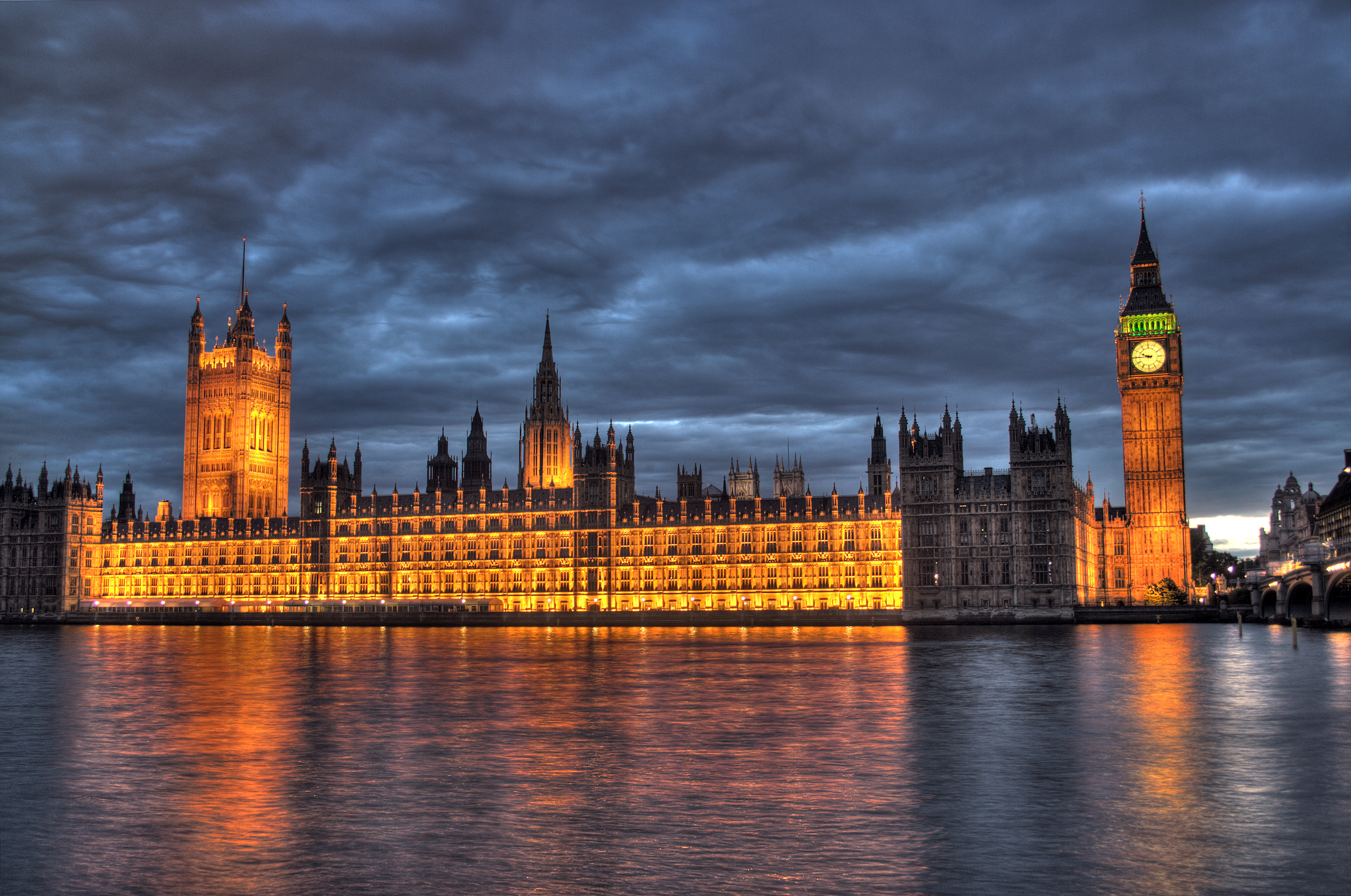
To begin with there are many aspects which hint at a democratic deficit, one of which is the House of Lords. The British Parliament runs on a Bi-Comeral system, which consists of the House of Commons and the House of Lords, one contains elected officials, one does not. The House of Lords contains Life Peers, these are not democratically elected and although you can no longer inherit a seat, it is still undemocratic. It also leaves the Lords without legitimacy because the people did not decide on who takes up the role of said Lords. Yet on the other hand the House of Lords does have the job of scrutinising any piece of Legislation so that not a single House holds complete control. 

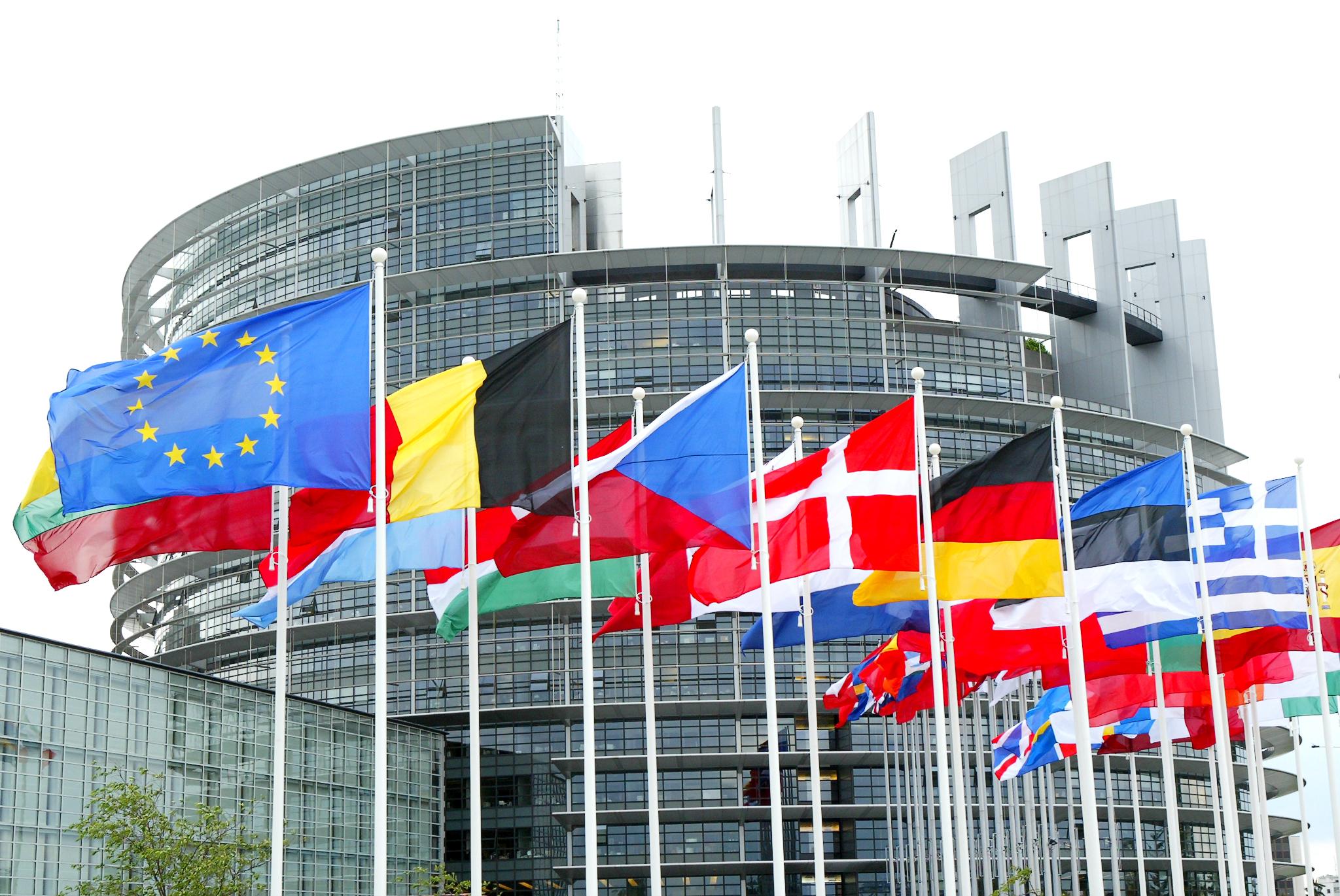
Linking to the ideas of our Parliament there are also many issues with the European Parliament, firstly the number of seats each EU member gets depends on the States population, this gives smaller smaller nations such as the Czech Republic less of a say in European affairs. Alternatively this is a positive aspect because a nation such as Germany (Which has the largest population in the EU) should have a greater say due to it containing the most amount of people. Yet once again on the other hand the EU Parliament can only amend laws, it cannot introduce any new piece of legislation. This is surly undemocratic because if an issue does arise the European Parliament is not given the power to put in place new legislation. The commissioners in the European Parliament can not be sacked from their positions, making it extremely difficult to remove inefficient commissioners, unlike the UK where you can put in place a vote of no confidence.  Additionally with Political Participation on the decline the number of people voting in EU elections are falling for example in 2009 the voter turnout for the EU elections was only 35.6% of people, this links to the idea that the population of the EU is confused with the idea of the European Parliament , to many it seems too distant from its citizens to make a large enough impact.The UK is also under 'Pooled Sovereignty' with the EU, this means that the UK shares it power with the EU, this could be somewhat seen as stealing the UK's full independence, yet on the other hand it is seen as a positive to share power between multiple entities, for example in the UK power isn't totally held in Westminster it is spread between Wales, Scotland and Northern Ireland.

Another way in which the UK is suffering from a democratic deficit is the voting system formally known as 'First Past the Post'. This system is not a truly democratic way of selecting a leader, for example a party with only 39% of the vote can still take power as this may be the largest majority. It also encourages the use of tactical voting, and if people are not voting for there preferred parties then they're not exercising their democratic right.

Sunday, 11 October 2015

Would a change in voting system improve democracy in the UK?

Would a change in voting system improve democracy in the UK?

The UK is seen as one of the most democratic nations in the modern world, however it is often argued that the UK's voting system does not allow for complete democracy. The UK uses the 'First Past the Post' system, this voting system is said to allow the winner to take all, this meaning that in most cases there is a clear majority winner at a constitutional and national level.

To begin with lets look at how the 'First Past the Post' system hinders complete democracy and fairness. One large downside of FPTP is the fact that the number of votes received in a General Election is not accurately reflected in the number of seats won in parliament. A very recent example of this occurring was in the 2015 General Election, UKIP gained 3,881,099 votes whereas the SNP gained 1,454,436. However despite these statistics clearly showing UKIP to be the victor of the two, it turned out that UKIP only got 1 seat in parliament whereas the SNP earned 50 seats. This basically voids many of the votes registered for UKIP, it in theory gave a lesser supported party greater power over those with a larger amount of support. Linked to these points under the 'First Past the Post' system smaller parties are left feeling unrepresented and weaker, for example some smaller parties might have national support yet do not gain many MPs because their supporters are wide spread and may not be concentrated in just one area/ constituency. Another disadvantage that challenges true democracies is the encouragement of tactical voting. For example people may decide it is not best to vote for their preferred party but instead vote for another , in order to stop a party from gaining power. This can often happen in elections and in parliament for example a labour supporter votes for the Liberal Democrats to stop the conservatives gaining a majority. One additional disadvantage is that which occurs in marginal constituencies (where voters change which party they side with election to election) the outcome of an election can be decided on the voting patterns in these situations, even although the constituents may number only a tiny proportion of the electorate.

However this system does have some advantages, extremist parties (such as hard-line communist and fascist parties) are unlikely to be elected as they would rarely gain enough votes in any one constituency. The time taken to calculate and work out the victor in an election is drastically reduced, the transfer of power from one party to the next is made very easy because of this. However with these points taken into consideration would a change in voting system really improve democracy. 

If the UK changed to a system similar to Proportional Representation it would make elections a lot more fair, mainly because this system addresses seats based on the number of votes a party gains. Smaller parties especially would benefit from this feature, yet this system does have its flaws in relation to smaller parties. Many voters would see this system as a chance to vote for their preferred party no matter the size, meaning that a lot of the time parliament would be filled with small parties making it impossible to make a majority decision. One example of this happening was in Weimar Germany in the 1920's due to the sheer number of small parties arguing amongst one another, a majority vote was difficult to secure. Democracy would be improved due to everyone having an equal chance at success however increased democracy can often lead to a reduced amount of efficiency

Sunday, 27 September 2015

Should the UK use more referendums?

Should the UK use more referendums?

In September of 2014 the people of Scotland voted as part of a referendum to decide the future of their nation, the referendum allowed the Scottish people decide their fate, everyone who voted had their voice heard. Now although referendums are extremely democratic are they always the best way of making a decision?

To begin with lets investigate the downsides of holding an increased amount of referendums. One downside is the high cost of holding one, for example many political parties campaign and advertise their point of view, this alone costs thousands of pounds. The Scottish referendum alone cost an estimated £13.3 million pounds, costs this high could have serious negative side effects if the government constantly introduces referendums. Secondly they have to compact complicated political and social matters into one short question, this issue can often leave voters unaware of the full picture and cause them to make the wrong decision all due to over simplification. Furthermore the wording and language used could be biased, this could purposely influence the voters choice on the question at hand. There has been evidence of this happening recently with David Cameron agreeing to change the wording on the 'In or Out EU Referendum' as many believed it favoured a pro-EU decision. Thirdly the constant use of referendums by the British Government would undermine the role of MP's, the whole reason for us electing MP's is so that they can represent us in the houses of Parliament. Therefore the use of referendums would make us ask the question what role does the MP now play, along with this it may also undermine the UKs parliamentary sovereignty as the power would be taken away from parliament and in turn given to the people. Finally the constant use of referendums could provoke a low voter turnout, this in turn makes the use of a referendum pointless due to the fact that only a small percentage of the people are having their say, therefore not reflecting the interests of the majority. This point links back to the high costs, high expenses linked with a low voter turnout will turn many against the idea of increasing the number of referendums.

Alternatively there are positive aspects of the UK using more referendums. The UK sees itself as a democratic beacon and increasing the use of referendums would only help reinforce this, referendums are seen as a strong form of 'Direct Democracy' this is due to the people having a greater say in the governments decision making. Linked to this, Political participation which has been on the decline in recent years could see an increase upon the use of referendums. Furthermore if the referendum is in relation to a new piece of legislation once passed the new law would have greater legitimacy as the majority approved its passing. Despite referendums giving the people a direct say it also increases government consultation with the public, generally the only other time this would happen is when a general election is due , the increased communication could increase government-public relations.

Overall I personally think there is strong evidence suggesting that the UK should not use more referendums, the extremely high costs combined with the risk of decreasing voter turnout even more is not worth the small democratic boost. As much as I would love to see the UK be a true democracy, I feel that referendums is that the correct away to go about such a task. They should have a restricted use and should be only implemented on issues whereby a people future is directly affected such as an independence referendum. Over use will bore voters, cause over spending and could lead to the wrong decisions be made in the long term.

Sunday, 20 September 2015

Is the UK truly democratic?

Is the UK Truly Democratic

When many people are asked about the way in which the UK is run the majority suggest that a form of democracy is the best way of describing it, however how true really is this statement, is the UK really a true democracy? 

To begin with an example of true democracy would be what is called 'Direct Democracy' this is where by the people are given an extremely large amount of power and regular chances to participate in the signing or dismissal of legislation. One example of this 'Direct Democracy' would be Switzerland, this central European nation gives it populous the chance to vote on any piece of legislation if they so choose. Yet, how does this stack up against the UK? Instead of us directly voting on legislature we instead choose and entrust elected officials to carry out this role for us. For example in the UK we vote for a political party which then puts forward a MP to represent us in Parliament. So overall does the UK's form of democracy make the nation truly democratic, no not really, the fact that each individuals voice is not heard proves that it is not a true democracy, however this system does seem to be some what efficient so it could be argued that a true democracy is not always necessary.

Secondly, there is another key aspect of the UK that must be considered, the Monarchy. The United Kingdom still has a constitutional monarch who is seen as the head of state when on overseas visits and ceremonial visits. Monarchies ruled with a autocratic grip, only the monarchs decisions would matter and only their voices would be heard, however in the modern day the Queens power is very limited. She has the right to be consulted and to advise and warn MP's, yet the Queen also wields the power to declare war and peace and due to this being a largely autocratic aspect it proves that democracy whilst still dominant could be overruled by the monarch in power. Overall for this section the UK could be described as being held back by the chains of autocracy due to its monarch stricken past, however it is unlikely the monarchs would ever regain full control therefore the legitimacy of democracy still stands.

Finally the UK uses the First Past the Post system when voting, although this system allows for the transfer of power from one party to the next easier, combined with the reduced chance of extremism, it is seen as less democratic when compared to Proportional Representation. With Proportional Representation a party wins seats depending on the amount of votes they gain, therefore smaller parties are given a fair chance in winning seats, this system is extremely democratic as each party is treated fairly. Despite this being fact the system has some serious faults, the most major being the appearance of dozens of small parties, therefore making it extremely difficult to come to an agreement

With all of this taken into consideration it seems that the UK is not the most democratic nation in the world, but is not due to a corrupt government, this is due to the UK taking the best bits from democratic systems and applying them to a 21st century government. Some are removed and added to make the system work better and others are kept for the matter of tradition and culture.